
Projects
Isotope Informed Chemical Reaction Networks
SASE: Simon Andren (Division of Geological and Planetary Sciences), SASE GRA Fellow
A natural sample’s “isotopic fingerprint”, the subtle variation in the distribution of heavier isotopes between and within molecules, encodes information about the chemical pathways and environmental conditions under which it formed. These signals offer insights into a diverse set of phenomena, ranging from tracking climate throughout time to understanding prebiotic chemistry in space. Thanks to significant analytical advancements, we can now measure these fingerprints at the resolution of individual atoms. However, interpreting these isotopic signals remains a challenging bottleneck. Current predictive models cannot account for the complexity of realistic chemical environments, nor can they efficiently postulate and model multiple competing hypotheses. The community lacks a standardized, quantitative framework to interpret observations of isotopic fingerprints and relate them to the specific reaction networks that produced them.
To bridge the gap between these high-resolution observations and our theoretical understanding of chemical origins, this project, in collaboration with the Schmidt Academy, works on building a community-ready, open-source “Isotope-Informed Chemical Reaction Network.” The software will integrate multiple components into a single platform. Firstly, it will utilize existing chemical reaction network algorithms for automated network exploration to generate feasible reaction pathways and kinetic modeling that simulates the evolution of chemical systems over time. These modules are coupled with rapid, self-consistent predictions of chemical isotope effects to predict resulting isotopic fingerprints, alongside a synthesis tool that converts kinetic outputs into theoretical mass spectra. This integration allows for the propagation of isotopic distributions through complex reaction networks, enabling direct comparison between theoretical models and experimental data.
One of the primary challenges of this project is the integration of these distinct computational modules into a functional, robust, and user-friendly package. The software engineering effort, with the support of SASE, will focus on implementing a modular design and reliable workflows to ensure the tool is accessible to a broad scientific community. By enabling the rigorous testing of hypotheses regarding chemical origins, this software aims to support the quantitative interpretation of measured isotopic fingerprints.
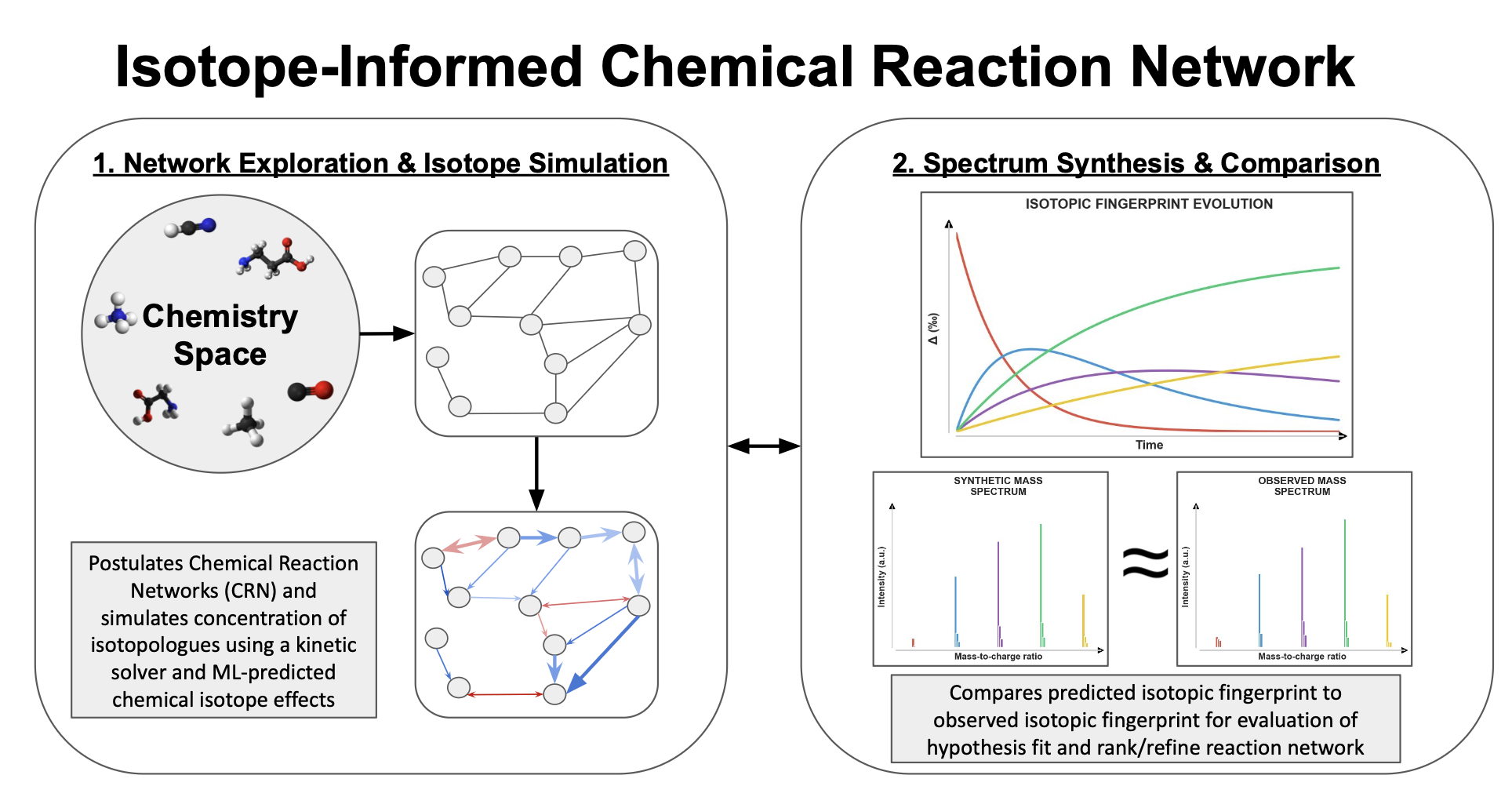
Figure 1: Isotope-Informed Chemical Reaction Network